About the Trek
Finding Inspiration from America's Wild Beauty

I’m a life-long conservationist and long-distance backpacker spending the next two years walking the Grand Western Trek—a 6,250-mile / 10,000-kilometer journey through some of America's most precious, wild and dramatic landscapes.
I’ve spent much of my career working with others to protect wildlife and wild places, often in some of the most remote corners of tropical Africa. This trek is my way of slowing down to truly see the landscapes I cross—their beauty, their history, and the challenges they face. Along the way, I'll be sharing what I learn about the conservation issues, stories, as well as capturing the quiet moments that remind us why these places matter.
My Background
I grew up in the foothills of the Cascade mountains of Washington State. As a child I spent countless hours among the douglas fir, alder, cedar trees, and critters on our property and beyond. The myth of the Sasquatch loomed large and I kept a watchful eye, hoping that I would one day catch a glimpse.


Later in life, after earning a degree at the University of Washington, I became a Peace Corps volunteer, posted in Lesotho, where I first fell in love not only with Africa but with my future wife, Emily. Living two years in a remote African village I learned just how critical the natural environment is for human well-being, many of the people in my village completely reliant on the their land, which was quickly disappearing from soil erosion caused by overgrazing and poor farming practices.
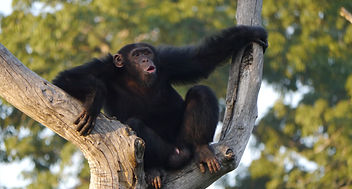
I returned to the U.S. to study environmental science and public policy at Indiana University and soon found myself becoming more and more interested in wildlife conservation having had the chance to work at The Nature Conservancy and Indiana's Yellowwood State Forest. After graduating, I took a job in Washington D.C. at Conservation International working with biologists from around the world to identify conservation priorities for high biodiversity areas. I focused much of my time supporting CI's work in the West African countries of Liberia, Côte I'voire, Ghana, Sierra Leone and Guinea. I loved the opportunity to work alongside and experience all of the color, culture, and biodiversity of those countries, while witnessing the sober reality of how quickly nature is disappearing in Africa and around the world. It was also an introduction to the wonderful science of tropical Africa, with charismatic species, such as the Western chimpanzee, the Pygmy Hippo, and the Viviparous Toad.



In 2002, I took a job with the U.S. Fish and Wildlife Service's National Wildlife Refuge System (NWRS). At the time, the NWRS was looking to find ways to be strategic in identifying future conservation lands to add to the system. It was an introduction not only to the concept of a system of lands managed together to meet the rangewide and lifecycle needs of migratory and endangered species but also the truly remarkable system of public lands, the American people have set aside for future generations. And I learned more about the legacy of the great American pioneering conservationists, such as Teddy Roosevelt, John Muir, Rachel Carson and also lesser known figures such as J. Clark Salyar, the first chief of the NWRS, John Wesley Powell who navigated the Colorado River and established the U.S. Geological Survey, and Giford Pinchot, the first chief of the U.S. Forest Service.
As much as I loved working for the NWRS, I deeply missed working in Africa and when a position opened up in the U.S. Fish and Wildlife Service's International Affairs program to serve as Program Officer for the Great Ape Conservation Fund (Africa species), I jumped at the chance. The Fund was set up as one of several conservation funds to protect species important to Americans, including rhinoceros, marine turtles, elephants, tigers, and all of the great ape species. It was then that I had the opportunity over the following 12 years to visit and work alongside primatologists throughout Africa, visiting some of the most remote places on earth, where chimpanzees, bonobos, and gorillas continue to live as they have for millennia. The intensity of threats facing great apes is severe though and all of the great ape species are critically endangered or endangered as classified by the International Union for Conservation of Nature's (IUCN). Faced with habitat loss, poaching, and disease, without greater support they will continue to face a highly uncertain future.


In 2019, I left the USFWS to take a position as the Great Ape Conservation Director with a new non-profit which became Re:wild. Re:wild's model of working directly with local field organizations and individuals appealed to me as a better way to support conservation in developing countries. The past 7 years have been some of the most rewarding professional years of my life with an opportunity to work with some of the world's most courageous conservationists at far flung places such as Virunga National Park in the Democratic Republic of the Congo.
Despite all of the wonderful individuals and places I've had the opportunity to work with and visit, today I find most of my time spent in front of a computer, sorting through endless emails, managing people and grants, worrying about funding, endless scrolling through the news, and becoming outraged every day now by the latest political B.S. The U.S. has changed dramatically over the past 10 years and I, like many of you, find myself feeling helpless about it. Inspired by backpackers such as Andrew Skurka's Great Western Loop hike in 2007 and many others that have sought to find adventure and fulfillment in the wild, I will be dedicating the next two years on a new journey.
The Great Western Trek is my attempt to reconnect with the land, experience both the beauty and promise of America, and hopefully share a bit of this journey with you.
Dirck Byler, 2025, Takoma Park, MD
